A spellbinding land of ancient temples and unforgettable smiles
Some countries stay with you from the very first seconds. Burma, or Myanmar, its official name, is one of them. As soon as you set foot there, the incense-laden air, the golden light wrapping the pagodas and the disarming kindness of the Burmese take hold of you. This is not a guidebook cliché. It is a reality every traveller who has been there can confirm.
Travelling in Burma means diving into an authentic Asia, still largely spared from mass tourism, where Buddhist traditions shape daily life and the landscapes range from arid plains to serene lakes and empty beaches. But it is also a complex country, shaped by political and social realities that it would be irresponsible to ignore.
This article is designed to give you all the keys, practical, cultural and human, to plan a trip to Burma with full knowledge of the facts. Whether you are a seasoned traveller or planning your first trip to Southeast Asia, you will find answers to your key questions here.
Burma or Myanmar: introducing a fascinating country
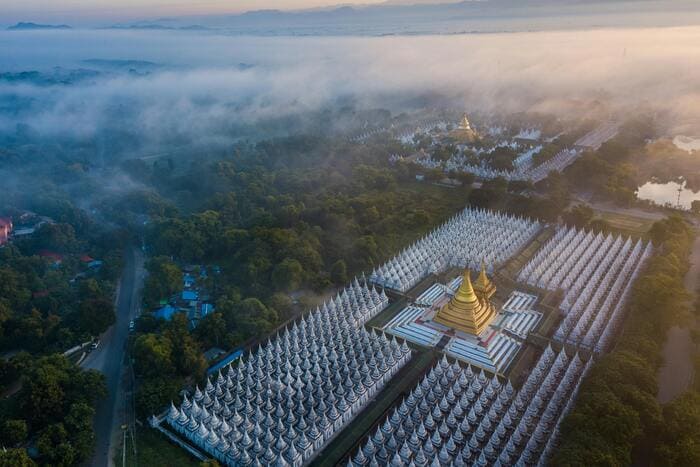
A crossroads of cultures and ethnic groups
Myanmar is a country of exceptional ethnic diversity. It officially has 135 distinct ethnic groups, spread over an area the size of France and the Benelux combined. The Bamar, the majority group, make up about 68% of the population, but the country is also home to the Shan, Karen, Kachin, Chin, Mon, Rakhine and many other communities, each with its own language, customs and traditional dress.
This human mosaic shows in the food, the crafts, the festivals and the landscapes. From Inle Lake to the hills of Shan State, from the temples of Bagan to the remote villages of Chin State, each region offers a different experience.
Buddhist spirituality, the beating heart of the country
Theravada Buddhism permeates every aspect of Burmese life. With more than 500,000 monks and nuns, Myanmar has the largest monastic community in the world relative to its population. Pagodas, stupas and monasteries are everywhere; there are tens of thousands of them across the country.
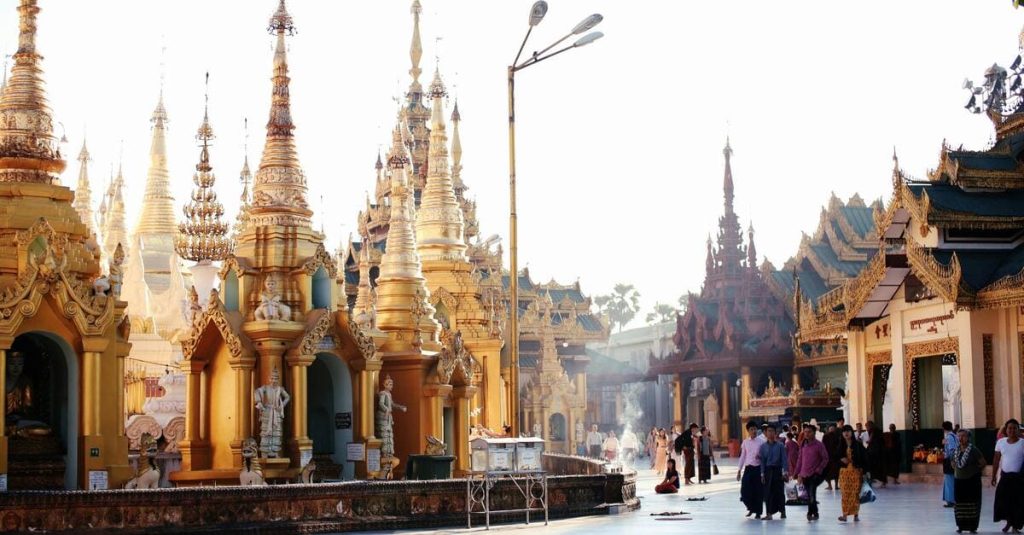
For travellers, this spirituality is part of everyday life: in the morning processions of monks collecting alms, in the respectful silence of the faithful at Shwedagon Pagoda, in the novitiation ceremonies where young boys enter the monastery for a while. It is not a show put on for tourists, but the very fabric of Burmese society.
Strikingly diverse landscapes
Myanmar is too often reduced to the plain of Bagan. Yet the country offers remarkable geographical variety: mountains rising above 5,800 metres in the north (Hkakabo Razi, the highest peak in Southeast Asia), dense tropical forests, majestic rivers such as the Irrawaddy and the Chindwin, temperate plateaus in Shan State, and a coastline of more than 2,000 kilometres lined with largely untouched beaches.
Can you travel to Burma today? Current situation and safety
What you need to know about the political context
Since the military coup of 1 February 2021, Myanmar has been going through a major political and humanitarian crisis. The army (Tatmadaw) overthrew the elected civilian government led by Aung San Suu Kyi and installed a military regime. Armed resistance movements have grown in several regions, and fighting takes place mainly in the peripheral ethnic states (Kayah, Kayin, Chin, Kachin, northern Shan State, Sagaing, Magway).
It is essential to check your foreign ministry's official advice before planning any trip to Myanmar. In 2024-2025, France formally advises against travel to much of the country and advises against all but essential travel to the main tourist areas.
Is Burma dangerous for tourists?
Let's be frank: asking whether Burma is dangerous for travellers is legitimate and deserves a nuanced answer.
The historic tourist areas (Yangon, Bagan, Mandalay, Inle Lake) have not seen direct clashes targeting tourists. Travellers who have been there in recent years generally report a trip without security incidents. The civilian population remains welcoming and basic tourist infrastructure works.
However, the situation is volatile and can change quickly. Curfews can be imposed without notice, communications (internet, phone) can be cut, and overland travel within the country is sometimes restricted or risky. Fighting in some regions makes entire areas inaccessible and dangerous.
My advice, after 15 years covering this country: if you decide to travel to Myanmar in the current context, stick strictly to the areas considered most stable, check the news every day, take out solid repatriation insurance, and register with your embassy. Above all, be discreet, as is necessary in a country under authoritarian rule.
The ethics of travelling there
Travelling to Burma today also raises a moral question. Some believe tourism indirectly funds the military junta (through taxes, army-linked businesses and so on). Others argue that foreign visitors support the civilian population, hotel owners, guides, craftspeople, restaurant owners, who are suffering badly from the economic crisis.
There is no universal answer. If you choose to go, favour accommodation and services run by civilians, avoid businesses known for their links to the army, and spend your money so that it benefits local communities directly.
Entry requirements for Myanmar: visa, passport, vaccines, insurance
Do you need a visa to travel to Myanmar?
Yes, a visa is mandatory for French, Belgian, Swiss and Canadian citizens, among others. Since the country's gradual reopening to tourism, the e-Visa is the most common way to obtain entry permission.
- Type: tourist visa
- Length of stay allowed: 28 days maximum
- Cost: around USD 50 (online)
- Processing time: usually 3 to 5 working days
- Official website: evisa.moip.gov.mm
Check that the service is operating when you apply, as procedures can change without notice in the current context. Your passport must be valid for at least six months after your planned date of entry.
Vaccines and health
No vaccine is officially required to enter Myanmar (except yellow fever if you are arriving from an endemic area). Nevertheless, the following vaccinations are strongly recommended:
- Hepatitis A and B
- Typhoid
- Japanese encephalitis (especially in rural areas and during the rainy season)
- Rabies (for long stays or remote areas)
- Diphtheria, tetanus and polio booster
Malaria is present in some rural and forested areas. Antimalarial treatment may be recommended depending on your itinerary. See an international vaccination centre at least a month before you leave.
Tap water is not safe to drink. Drink only bottled or purified water.
Travel insurance: essential
In the Burmese context, travel insurance covering medical costs, hospitalisation and medical repatriation is absolutely essential. Medical facilities in Myanmar are very limited outside Yangon, and evacuation to Bangkok (Thailand) may be needed in the event of a serious health problem.
When to go to Burma? Climate, seasons and the best time
Myanmar has three distinct seasons, dictated by the monsoon:
The cool dry season (November to February)
This is the best time to travel to Burma. Temperatures are pleasant (20-30°C depending on the region), there is almost no rain and the sky is usually clear. It is also the high tourist season, with higher accommodation prices and more visitors at the main sites.
The hot season (March to May)
Temperatures rise sharply, regularly exceeding 40°C on the central plains (Bagan, Mandalay). Travel is still possible but physically demanding, especially for temple visits. The upside: fewer tourists and lower prices. April coincides with Thingyan, the Burmese New Year and its famous water festival, a memorable cultural experience.
The rainy season / monsoon (June to October)
Rainfall is heavy, especially in the south and along the coasts. Some roads become impassable, areas can flood, and overland travel gets complicated. Yet the country takes on a lush beauty, prices are at their lowest, and the tourist sites are empty. Flexible, adventurous travellers will find an incomparable charm.
The must-sees on a trip to Burma
Bagan: the plain of 2,000 temples
Bagan is, without exaggeration, one of the most spectacular archaeological sites on the planet. Across a 42 km² plain, more than 2,000 temples, pagodas and monasteries dating from the 9th to the 13th century rise in breathtaking light. Exploring Bagan by e-bike at sunrise is one of the most striking moments Asia has to offer. Among the major monuments: Ananda Temple, Dhammayangyi, Sulamani and Shwezigon Pagoda.
For sunrise, sleeping inside Old Bagan or Nyaung U changes everything: the best viewpoints are earned on an e-bike at 5am, and nobody wants to start from far away. See the places to stay in Bagan.
Yangon: the vibrant former capital
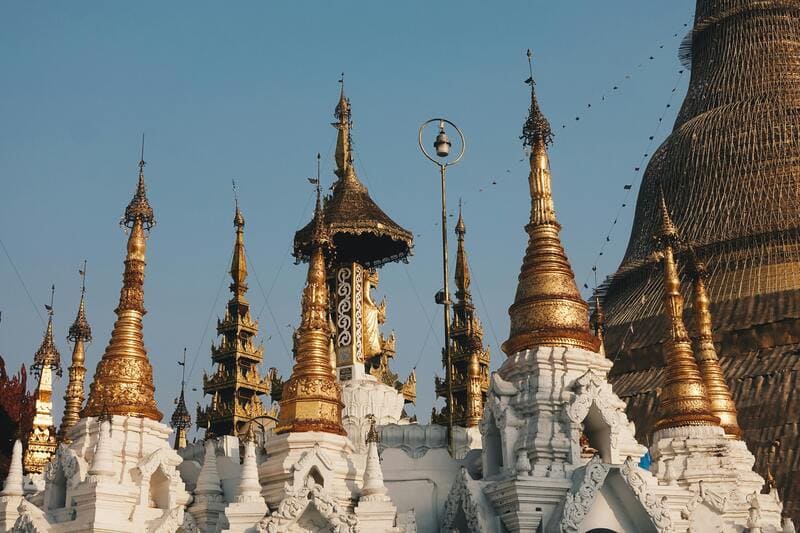
Yangon (formerly Rangoon) has not been the official capital since 2006, a role that now belongs to Naypyidaw, but it remains the country's economic and cultural heart. Shwedagon Pagoda, covered in tonnes of gold and thousands of precious stones, is the most sacred place in Burma. The colonial city centre, Bogyoke Market (Scott Market), Chinatown and the fervour of the pagodas at sunset make it an essential stop on any trip to Burma.
Yangon is the almost unavoidable way into the country, and it is where the price gap is widest: you will find guesthouses for a few dollars alongside restored colonial hotels. Look at the hotels in Yangon.
Inle Lake: life on the water
Perched at 880 metres above sea level in Shan State, Inle Lake fascinates with its unique ecosystem. The Intha fishermen, famous for rowing with one leg, the floating gardens, the stilt monasteries and the rotating markets make up a living picture of rare beauty. Allow at least two days to explore the lake and its surroundings, including the weaving village of In Paw Khone and Nga Phe Kyaung monastery.
The logistical base for the lake is Nyaung Shwe, the small town at the northern entrance: every boat leaves from there and that is where the accommodation is concentrated. See the places to stay in Nyaung Shwe.
Mandalay and its former royal capitals
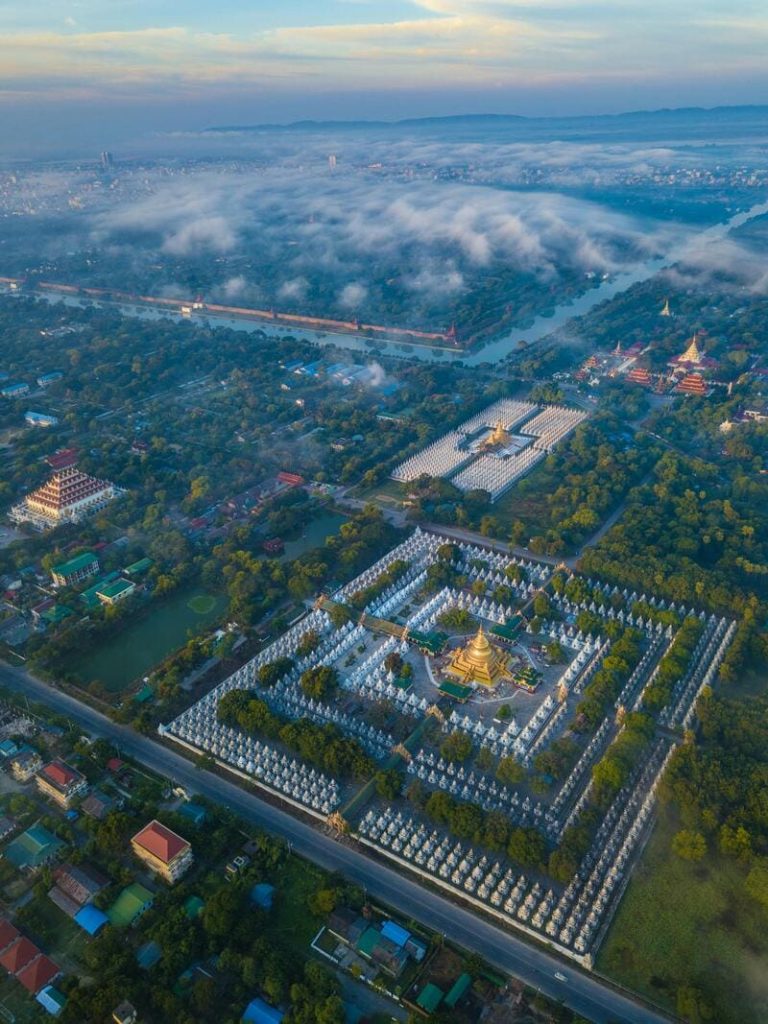
Mandalay, the country's second city, is the cultural and religious centre of Upper Burma. Mandalay Hill, the U Bein teak bridge (the longest in the world, 1.2 km), the royal palace and the traditional craft workshops deserve several days of exploration. Around Mandalay, the former royal capitals of Amarapura, Inwa (Ava), Sagaing and Mingun offer a deep dive into the country's dynastic history.
Mandalay works best as a base for two or three nights, since Amarapura, Inwa and Mingun are all day trips from the city rather than places to sleep. See the hotels in Mandalay.
The Golden Rock (Kyaiktiyo)
This granite boulder covered in gold leaf, balanced on the edge of a cliff, is one of the most revered pilgrimage sites in Myanmar. The climb and the mystical atmosphere of the place, especially at sunset, leave a lasting impression.
The beaches: Ngapali, Ngwe Saung and the Mergui Archipelago
Tourism in Burma is not just about temples. The Burmese coast has magnificent beaches that are still little visited. Ngapali, on the Rakhine coast, is the most famous: white sand, turquoise water, local fishermen. Ngwe Saung, easier to reach from Yangon, is a pleasant alternative. The Mergui Archipelago, in the south, with more than 800 islands, remains one of the last almost untouched areas of Southeast Asia, accessible mainly by cruise.
Ngapali is the easiest of the three to organise: a handful of beachfront resorts, no concrete sprawl, and rates nowhere near Thailand's for the same standard. See the places to stay in Ngapali.
Hsipaw and the treks of Shan State
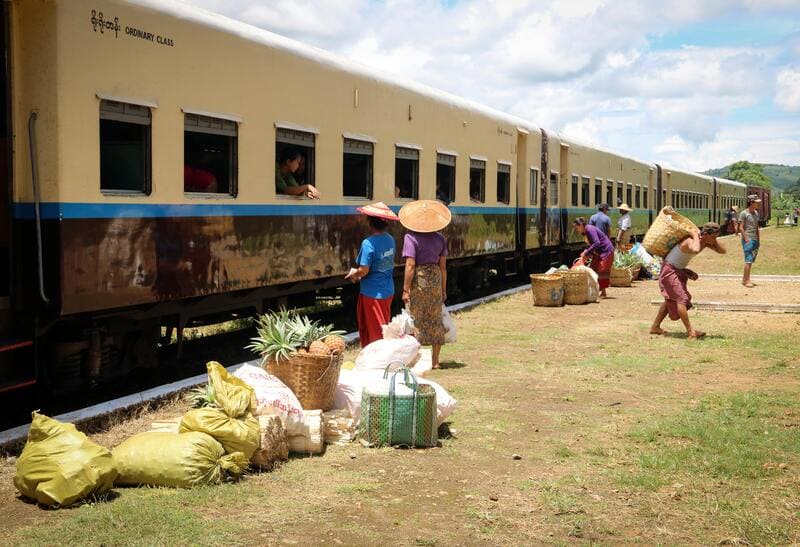
For travellers looking for authenticity and hiking, the small town of Hsipaw and its surroundings offer treks through Shan, Palaung and Lisu villages, among hills covered in tea plantations. The famous train ride between Pyin Oo Lwin and Hsipaw, crossing the Gokteik Viaduct, is one of the most memorable rail journeys in Asia.
How much does a trip to Burma cost?
Myanmar is no longer the ultra-cheap destination it was ten years ago, but it is still affordable compared with Europe.
Estimated daily budget (per person)
| Category | Backpacker budget | Comfort budget | Luxury budget |
|---|---|---|---|
| Accommodation | USD 10-20 | USD 40-80 | USD 100-300+ |
| Meals (3/day) | USD 5-10 | USD 15-25 | USD 30-60 |
| Local transport | USD 5-10 | USD 10-20 | USD 20-50 |
| Sights / entry fees | USD 5-10 | USD 10-15 | USD 15-25 |
| Total / day | USD 25-50 | USD 75-140 | USD 165-435 |
Domestic flights (Yangon-Bagan, Yangon-Heho for Inle Lake) usually cost between USD 80 and 150 per leg and save a considerable amount of time compared with buses (often 8 to 12 hours on poor roads).
Currency and payment
The local currency is the kyat (MMK). In practice, US dollars are widely accepted for accommodation and tourist services. Notes must be in perfect condition, with no folds, stains or writing, or they will be refused.
ATMs exist in the big cities, but breakdowns and low withdrawal limits are common. Bring enough US dollars in cash as a backup. Bank cards are accepted in upmarket hotels and some restaurants, but do not count on them outside Yangon and Mandalay.
Essential practical tips for travelling in Burma
Internet and communication
Connectivity has improved considerably in Myanmar in recent years, but it remains unstable, especially since 2021. Internet shutdowns are possible, and a VPN is often needed to access some services. Get a local SIM card (Ooredoo, MPT or Mytel) as soon as you arrive at the airport to have mobile data.
Getting around the country
Transport options are varied but uneven in quality. VIP night buses are fine for long distances. Trains are slow and old but offer memorable experiences (such as the Yangon Circle Line or the journey to Hsipaw). Domestic flights are the fastest way to cover long distances. In cities, taxis (agree the price first) and apps like Grab (in Yangon) are the most practical options.
Cultural codes and etiquette
Respecting local customs is not optional: it is a matter of basic decency.
- Take off your shoes and socks before entering any religious space (pagodas, monasteries, temples). No exceptions.
- Dress modestly in places of worship: shoulders and knees covered, for men and women alike.
- Never touch anyone's head: it is the most sacred part of the body in Burmese Buddhist culture.
- Do not point your feet at a person or an image of the Buddha: feet are considered the most impure part of the body.
- Ask permission before photographing monks, nuns or people praying.
- Be very discreet about politics. Do not put Burmese people at risk by openly asking them about the political situation in public places.
Mistakes to avoid and good practice for responsible travel
Classic traveller mistakes
Underestimating distances. Myanmar is a big country and the road infrastructure is often poor. A journey that looks short on the map can take a whole day.
Travelling without cash. The banking infrastructure is fragile. Running out of cash in a small Burmese town is stressful and entirely avoidable.
Skipping travel insurance. Given the context and the medical limitations, leaving without solid cover is a serious mistake.
Dressing inappropriately in temples. It is a sign of disrespect that the Burmese, out of politeness, will not always point out, but they will notice.
Towards responsible tourism
- Choose local, independent accommodation and guides with no links to military conglomerates.
- Buy crafts directly from the craftspeople rather than in big hotel shops.
- Cut down on plastic: bring a filter water bottle.
- Respect archaeological sites: do not climb the temples of Bagan (it has been forbidden since 2019 for conservation and safety reasons).
- Find out about local community tourism initiatives, especially in Shan State and Chin State.
FAQ: everything to know before travelling to Burma
Can you travel to Burma today?
Technically, yes. Myanmar issues tourist visas and international flights serve Yangon. However, the country has been in internal conflict since the 2021 coup. The areas open to tourists are limited, and many countries' foreign ministries advise against travel to all or part of the country. A trip is possible in the areas considered stable (Yangon, Bagan, Mandalay, Inle Lake), but requires careful preparation and constant vigilance.
Is Burma dangerous for tourists?
Tourists are not targeted as such, and the main tourist areas have not seen direct violence against visitors. However, the security situation is unpredictable. The main risks are sudden travel restrictions, communication blackouts and the possibility of getting stuck. Areas of active conflict (Kayah, Kayin, Chin, Kachin, Sagaing and Rakhine states) must be avoided.
What is the best time for a trip to Burma?
The ideal period runs from November to February: mild temperatures, clear skies, no rain. March is still acceptable but the heat builds. Avoid June to October if you are not comfortable with the monsoon and the disruption it brings.
Do you need a visa to travel to Myanmar?
Yes, for most nationalities, including France, Belgium, Switzerland and Canada. The tourist e-Visa is the simplest option: apply online, get an answer within a few days, valid for 28 days. Cost: around USD 50.
How much should you budget for a trip to Burma?
Allow USD 25 to 50 a day as a backpacker, USD 75 to 140 a day for a comfortable trip, and USD 165 or more for a luxury stay. Domestic flights, site entry fees and the visa are fixed costs to include in your overall budget.
What typical dishes should you try in Burma?
Do not leave Myanmar without trying mohinga (fish soup with rice noodles, the national dish), tea leaf salad (fermented tea leaf salad), Shan noodles, Burmese curry served with plenty of side dishes, and Burmese samosas, a legacy of Indian influence.
Can women travel alone in Burma?
Burma is traditionally considered one of the safest countries in Southeast Asia for solo female travellers, thanks to a deeply rooted culture of respect. The usual precautions apply (as anywhere in the world), but the vast majority of women travellers' accounts are positive. In the current context, the same general safety precautions apply to all travellers, whatever their gender.
How do you get around the country?
Domestic flights are the most efficient option for long distances (several airlines: Air KBZ, Myanmar National Airlines, Air Thanlwin). VIP night buses link the main tourist towns. Boats on the Irrawaddy (especially the Mandalay-Bagan route) offer an unforgettable river experience. Trains are slow but scenic. In cities, use taxis or motorised tricycles.
Conclusion: Burma, a trip like no other
Travelling to Myanmar means accepting to enter a country that does not reveal itself easily. It is a trip that requires preparation, humility and genuine curiosity. But it is also one of those rare journeys that change the traveller for good.
Burma is not a destination like any other. It does not try to seduce with theme parks or crowded beaches. It offers something rarer: authenticity. The grace of a monk walking barefoot at dawn, the silent majesty of Bagan in the morning mist, the laughter of a child with a face covered in thanaka, the serenity of Inle Lake at dusk: these moments stay with you long after you return.
In the current context, choosing to travel to Burma is a decision that takes thought. Get informed, prepare yourself, use your judgement. And if you decide to go, travel with awareness, with respect, and with an open heart. Despite everything they are going through, the Burmese continue to offer visitors their most precious gift: their hospitality.
This trip to Burma could well become the most beautiful of your life. It will certainly be the most memorable.
Planning a trip? Find all the information by clicking HERE.