Somewhere between Canada and Iceland, beyond the Arctic Circle, lies an island of 2,166,086 km², the largest island in the world, 80% of which is covered by an ice sheet that is sometimes more than 3 km thick. A land home to 56,000 people spread across colourful villages clinging to the fjords. A territory where there are no roads between towns: you get around by plane, helicopter, boat or dog sled. A place where, depending on the season, the sun never sets or never rises.
Welcome to Greenland (Kalaallit Nunaat in Greenlandic, "Land of the Greenlanders"), an autonomous territory of the Kingdom of Denmark, and one of the most extraordinary, wildest and hardest-to-reach destinations in the world. But how do you get to Greenland?
For a traveller from France, Greenland is a dream of polar adventure: monumental icebergs, northern lights, whales, dizzying fjords, living Inuit culture, the midnight sun, absolute silence. But that dream immediately raises a very practical question: how on earth do you get there?
Because a trip to Greenland cannot be improvised. Historically, the island has had no runway able to take large aircraft on direct international flights from mainland Europe. Connections traditionally go through Denmark or Iceland, with onward flights on small planes. Prices are high, logistics are complex, and Arctic weather can upset any plan.
But things are changing. Greenland is transforming its airport infrastructure, with new airports in Nuuk and Ilulissat that promise to open the island to direct international flights from Europe, a historic shift. Add to that an unprecedented geopolitical context (the Trump administration's statements about Greenland in early 2025 put the island in the global spotlight), and you have a destination in the middle of a media and tourism boom.
This guide gives you all the practical information you need to understand how to reach Greenland from France, how much it costs, when to go, and how to plan your trip to this one-of-a-kind territory.
Understanding Greenland's geography and logistics
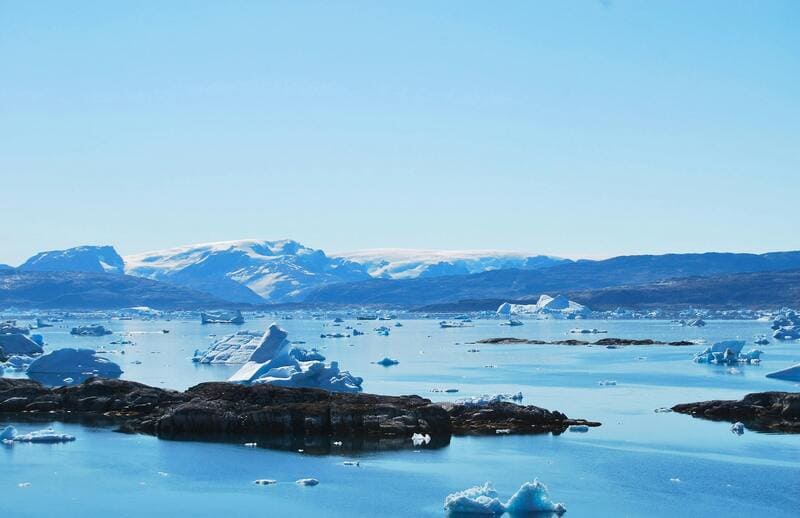
Before going into the details of flights and routes, it is essential to understand why getting to Greenland is so unusual in logistical terms.
A huge territory with no road network
Greenland is four times the size of France, but has only 56,000 inhabitants, fewer than a small French town. Towns and villages are scattered along the coast (the interior is covered by the ice sheet) and no road connects them. None. Not a single kilometre of tarmac between Nuuk and Ilulissat, between Kangerlussuaq and Sisimiut, or between any two settlements.
This means that all travel between towns is by plane, helicopter or boat, including for the locals themselves. This is everyday reality in Greenland, and it is what makes the trip both fascinating and logistically demanding.
Greenland's airports: the current situation and the changes under way
This is THE key topic for understanding how to get to Greenland in 2026-2027.
The historical situation (until recently)
Historically, Greenland's main international airport is:
Kangerlussuaq (SFJ): a former US air base built during the Second World War, located inland on the west coast, about 25 km from the ice sheet. It is the only Greenlandic airport with a runway long enough (2,810 m) for long-haul aircraft. The vast majority of international travellers arriving in Greenland went through Kangerlussuaq, then took a domestic flight to their final destination (Nuuk, Ilulissat, Sisimiut and so on).
The problem: Kangerlussuaq is not a "real" town. It is a former military base with a few hundred inhabitants, one hotel and little to see. It is a transit hub, not a destination. That added a connection, extra cost and an extra risk of delay to every trip.
Narsarsuaq (UAK) airport, in southern Greenland, also offered a few international connections (notably to Iceland), but with very limited frequencies.
The new airports: a revolution in progress
The Greenlandic government has launched a massive airport modernisation programme to allow direct international flights to the main towns:
| Airport | Status (June 2025) | Runway | Expected impact |
|---|---|---|---|
| Nuuk (GOH): new international airport | Construction well advanced. The opening has been postponed several times. Originally planned for 2024, it is now expected in 2025 or early 2026. | 2,200 m runway (able to take A320neo and similar aircraft) | Direct international flights from Copenhagen and potentially Iceland to the capital. A game changer. |
| Ilulissat (JAV): airport extension | Under construction. Opening expected roughly 2026-2027 (dates subject to change) | Extended runway | Direct international flights to Greenland's tourist capital (icebergs, Disko Bay) |
| Kangerlussuaq (SFJ) | Operational. Will continue as a transit hub until the new airports are fully operational | Existing runway (2,810 m) | Role likely to shrink once Nuuk and Ilulissat are operational |
⚠️ Crucial information: at the time of writing (June 2025), the exact opening dates of the new airports in Nuuk and Ilulissat are not definitively confirmed. The project has faced delays linked to building in Arctic conditions, funding issues and reorganisations. Check the latest information with:
- Kalaallit Airports (Greenland's airport operator)
- Visit Greenland (official tourist board)
- Air Greenland
What this changes for travellers: once the new airports are operational, it will be possible to fly directly from Copenhagen to Nuuk (and later to Ilulissat) without going through Kangerlussuaq. This will considerably reduce journey time and complexity. Direct links from Iceland (Reykjavik) are also being considered. Eventually, direct flights from other European capitals could be added, but nothing is confirmed at this stage.
The different ways to get to Greenland from France
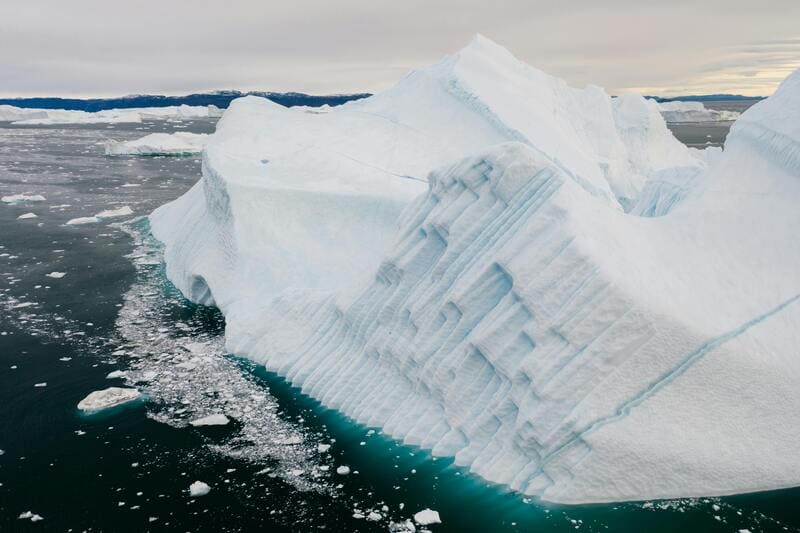
Option 1: via Copenhagen (Denmark), the classic route
This is the most used and most reliable route.
The route
Paris (CDG/ORY) → Copenhagen (CPH) → Kangerlussuaq (SFJ) or Nuuk (GOH)Step 1: Paris → Copenhagen
| Airline | Type | Duration | Indicative return fare |
|---|---|---|---|
| SAS (Scandinavian Airlines) | Direct | ~2h15 | €150-400 |
| Air France | Direct | ~2h15 | €150-450 |
| Norwegian | Direct | ~2h15 | €100-300 |
| easyJet | Direct (seasonal, from some cities) | ~2h30 | €80-250 |
| Transavia | Direct (seasonal) | ~2h30 | €80-250 |
Copenhagen is extremely well served from France. Flights are frequent, short and often affordable.
Step 2: Copenhagen → Greenland
This is where things get tricky, and where the budget shoots up.
The main airline: Air Greenland (the Greenlandic national airline) operates almost all flights between Denmark and Greenland.
| Route | Duration | Frequency | Aircraft | Comment |
|---|---|---|---|---|
| Copenhagen → Kangerlussuaq | ~4h30-5h | Several flights a week (varies by season) | A330neo (recently acquired by Air Greenland) | The main historical route |
| Copenhagen → Nuuk (once the new airport is operational) | ~4h30 | To be confirmed | A320neo or similar | Expected in 2025-2026 |
Indicative fares Copenhagen → Greenland (return):
⚠️ Warning: flights to Greenland are expensive. Fares vary considerably depending on the season, demand and how far ahead you book.
| Period | Indicative return fare (Copenhagen-Kangerlussuaq or Nuuk) |
|---|---|
| Low season (winter, outside holidays) | ~€500-900 |
| Shoulder season | ~€700-1,200 |
| High season (summer, June-August) | ~€900-1,800 |
(These fares are estimates based on prices seen in recent years. They can vary significantly. Check airgreenland.com for current prices.)
Total flight budget Paris → Greenland (via Copenhagen)
Combining the two legs:
| Profile | Total return flight budget (estimate) |
|---|---|
| Good deal (low season, booked early) | €700-1,200 |
| Average fare | €1,000-1,800 |
| High season / last minute | €1,500-2,500+ |
Tips for this route
- Plan a night in Copenhagen: connections are not always on the same day. And it is a lovely city to visit.
- Book the flight to Greenland FIRST: it is the most expensive and least frequent leg. Fit your Paris-Copenhagen flight around it.
- Book early: planes to Greenland are small and flights infrequent. In summer, they fill up months in advance.
- Luggage: check Air Greenland's baggage allowances, which may differ from European standards.
Option 2: via Reykjavik (Iceland), the spectacular alternative
The route
Paris (CDG/ORY) → Reykjavik-Keflavik (KEF) → Greenland (various airports)Step 1: Paris → Reykjavik
| Airline | Type | Duration | Indicative return fare |
|---|---|---|---|
| Icelandair | Direct | ~3h30 | €200-500 |
| PLAY | Direct | ~3h30 | €150-400 |
| Transavia | Direct (seasonal) | ~3h30 | €150-350 |
| easyJet | Direct (seasonal) | ~3h30 | €120-350 |
Step 2: Reykjavik → Greenland
From Iceland, several airlines operate (or have operated) routes to Greenland:
| Airline | Route | Duration | Frequency | Comment |
|---|---|---|---|---|
| Icelandair | Reykjavik → Nuuk or Ilulissat | ~3h-3h30 | Seasonal (mainly summer) | Routes launched in 2024, check frequencies each season |
| Air Greenland | Reykjavik → Nuuk | ~3h | Variable | Some routes operated through code-sharing |
| Norsaq Airlines (new airline) | Possible routes from Reykjavik | To be confirmed | To be confirmed | Recently launched airline; check that it exists and which routes it flies at the time of your trip |
⚠️ Note: Iceland-Greenland routes are changing fast. New routes are announced regularly, and others are suspended. The opening of the new airports in Nuuk and Ilulissat should multiply connections from Reykjavik. Check current offers when you book.
Advantages of the Icelandic route
- Iceland + Greenland combo: the most popular itinerary for travellers who want to make the most of their Arctic trip. A few days in Iceland (Golden Circle, Blue Lagoon, glaciers) followed by Greenland, two complementary destinations.
- Geographical proximity: Iceland is the closest country to Greenland (the Denmark Strait is ~300 km wide). Flights are short.
- Flexibility: if your flight to Greenland is cancelled (weather), you are in Iceland, which is hardly the worst consolation.
Disadvantages
- Routes are often seasonal (summer only for most).
- Fewer flights than the Danish route.
- Flight availability changes from year to year.
Option 3: expedition cruise
For those who want to arrive in Greenland by sea: an experience in its own right.
Expedition cruise companies
Several companies offer expedition cruises that call at Greenland or are entirely dedicated to the island:
| Company | Nationality | Type | Comment |
|---|---|---|---|
| Ponant | French 🇫🇷 | Luxury expedition | Ships Le Commandant Charcot (icebreaker), Le Boréal, etc. Regular Greenland itineraries. French-speaking |
| Hurtigruten | Norwegian | Expedition | Greenland coastal cruises and long-haul crossings |
| Quark Expeditions | Canadian | Polar expedition | Arctic specialist |
| Albatros Expeditions | Danish | Expedition | Departures from Iceland or Denmark |
| Hapag-Lloyd Cruises | German | Upmarket expedition | Hanseatic Inspiration and Nature |
Typical itineraries
- Iceland → Greenland (east or west coast): 8-14 days
- Greenland tour (west coast, from Kangerlussuaq to Ilulissat and beyond): 10-18 days
- Northwest Passage (Greenland → Canadian Arctic): 18-25 days
- Svalbard → Greenland → Iceland: 14-21 days
Cruise budget
Fair warning: it is a significant investment.
| Range | Indicative price per person |
|---|---|
| Standard expedition | €5,000-10,000 |
| Premium expedition | €10,000-20,000 |
| Luxury / icebreaker | €15,000-40,000+ |
Advantages of a cruise
- Access to sites unreachable by land or air (remote fjords, the isolated east coast)
- Logistics fully taken care of
- Expertise of the naturalists and guides on board
- A unique experience of sailing among icebergs
- Meals, excursions and some equipment are often included
Disadvantages
- Very high price
- Less flexibility (fixed itinerary)
- Potential seasickness (the Denmark Strait is known for its rough waters)
- Limited season (June-September for most itineraries)
Option 4: charter flight or specialist package tour
Some French tour operators specialising in polar travel offer complete packages including flights, accommodation, excursions and logistics. It is often the simplest solution (everything is organised) but not always the cheapest.
French operators offering Greenland:
- Grand Nord Grand Large (polar specialist)
- Terres d'Aventure
- 66° Nord (Arctic specialist)
- Voyageurs du Monde
- Nomade Aventure
(For information only, not exhaustive and in no particular order: do your own research.)
Entry requirements for Greenland
Visa and formalities
Greenland is an autonomous territory of the Kingdom of Denmark but is part of neither the European Union nor the Schengen area. This has practical implications:
| Requirement | Details |
|---|---|
| Visa | Not required for French citizens for a tourist stay of up to 90 days |
| Travel document | Valid passport mandatory. ⚠️ A French national ID card is NOT enough (Greenland is outside Schengen) |
| Passport validity | Valid for the length of your stay (some sources recommend 6 months' validity after your return date: check with the Danish authorities) |
| Border control | Yes: there is a passport check on arrival in Greenland, even if you transit through Denmark (Schengen → non-Schengen) |
⚠️ Watch out: if you transit through Copenhagen and your flight to Greenland leaves the same day, you will go through a Schengen exit check in Copenhagen. Allow time for your connection.
Travel insurance
Comprehensive travel insurance is strongly recommended (essential in practice). Greenland has a functioning healthcare system (a hospital in Nuuk, clinics in the towns), but capacity is limited, and any medical repatriation from Greenland is extremely expensive (air evacuation to Copenhagen or Reykjavik).
Check that your insurance covers:
- Medical costs abroad (outside the EU)
- Medical repatriation
- Flight cancellation/delay (common in Greenland because of the weather)
- The activities you do (hiking, kayaking, sledding, etc.)
Source: France Diplomatie, Denmark / Greenland: Greenland is covered on the Denmark page.
When to go to Greenland: the seasons
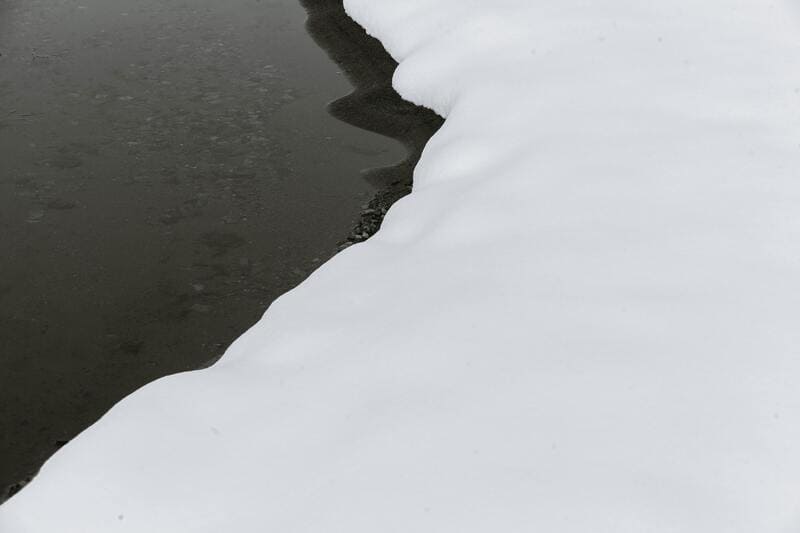
Greenland offers radically different experiences depending on the season. The time you choose determines not only what you will see, but also what is logistically possible.
Seasons at a glance
| Period | Daylight | Temperature (west coast) | Conditions | Highlights | Rating |
|---|---|---|---|---|---|
| January-February | Polar night in the north; very short days in the south (~4-6h) | -15 to -30°C (inland), -5 to -15°C (coast) | Intense cold, snow, ice | Northern lights, dog sledding, cross-country skiing, polar night | ⭐⭐⭐ (niche) |
| March-April | Days lengthening fast | -10 to -20°C (inland), -5 to -10°C (coast) | Still wintry but brighter. Solid sea ice | Dog sledding (best time), skiing, northern lights (March), the sun returns | ⭐⭐⭐⭐ |
| May | Very long days, midnight sun in the north from late May | -5 to +5°C | Transition, snowmelt begins. Sea still frozen in some areas | Transition, quiet. First boat trips possible in the south | ⭐⭐⭐ |
| June-August | Midnight sun (24h of daylight north of the Arctic Circle) | +5 to +15°C (coast), up to +20°C exceptionally | High season. Navigable sea, floating ice, active wildlife | Icebergs, hiking, kayaking, whales, wildlife, Arctic flowers, accessible villages | ⭐⭐⭐⭐⭐ |
| September | Days shortening fast. First northern lights | 0 to +8°C | Autumn colours (red/orange tundra). Sea still navigable. Northern lights begin | Northern lights + landscapes, autumn hiking, last cruises | ⭐⭐⭐⭐⭐ |
| October-November | Very short days in the north | -5 to +2°C | Frost, first snow, sea starts to freeze | Northern lights, absolute calm, start of the winter season | ⭐⭐⭐ |
| December | Polar night north of the Arctic Circle | -10 to -25°C | Arctic winter, cold, darkness | Intense northern lights, an extreme experience | ⭐⭐ (adventurers) |
The two main tourist seasons
1. Summer (June-August): high season
- This is when most travellers visit Greenland
- Midnight sun, mild temperatures, navigable sea, spectacular icebergs
- Hiking, kayaking and whale watching are possible
- More flights and boat services available
- Downsides: highest prices, booking needed far in advance, mosquitoes inland (July)
2. Winter (February-April): polar season
- Northern lights, dog sledding on the sea ice, snowy landscapes
- A "pure" Arctic experience, few tourists
- Downsides: extreme cold, short days (except late March-April), fewer flights, more complex logistics
The sweet spot: September. The sea is still navigable, the tundra's autumn colours are spectacular, the northern lights begin, there are fewer people than in summer, and prices are slightly lower. It is the favourite month of many experienced travellers.
Where to go in Greenland: the main destinations
A mental map of Greenland
Greenland is divided into several tourist regions. The west coast has most of the infrastructure and accessible destinations.
🏔️ Ilulissat and Disko Bay: the iceberg capital
Greenland's number one destination. If you only visit one place, make it this one.
| Information | Details |
|---|---|
| Population | ~4,500 |
| Latitude | 69°N (above the Arctic Circle) |
| UNESCO | Ilulissat Icefjord, World Heritage Site (2004) |
| Access | Flight from Kangerlussuaq (or soon from Copenhagen/Reykjavik once the airport is extended) |
The Ilulissat Icefjord (Sermeq Kujalleq) is where one of the most productive glaciers in the northern hemisphere calves monumental icebergs into a 40 km-long fjord. The blocks of ice, some as tall as 10-storey buildings, drift slowly towards Disko Bay in a spectacle that defies imagination.
Things to do:
- Hike along the Icefjord (marked trails, several options from 1 to 5 hours)
- Boat trip among the icebergs (a must)
- Kayaking among the ice (an extraordinary experience)
- Humpback whale watching (summer)
- Helicopter flight over the Sermeq Kujalleq glacier
- Visit to the Knud Rasmussen Museum (Danish-Greenlandic polar explorer)
- Midnight sun (June-July) over the icebergs
🏘️ Nuuk: one of the smallest capitals in the world
| Information | Details |
|---|---|
| Population | ~19,000 (a third of the country's population) |
| Latitude | 64°N (just south of the Arctic Circle) |
| Access | Flight from Kangerlussuaq (or soon direct from Copenhagen) |
Nuuk is Greenland's capital and its "big city", relatively speaking. It offers a fascinating mix of Nordic modernity and Inuit culture:
- Greenland National Museum: an exceptional collection including the famous Qilakitsoq mummies (15th-century Inuit mummies, remarkably well preserved)
- Nuuk Cathedral (Annaassisitta Oqaluffia): the oldest church in Greenland (1849)
- Nuuk Art Museum: contemporary Greenlandic art
- Nuuk Fjord: kayaking, hiking and whale watching from the city
- Colonial quarter: historic colourful houses
- Katuaq: a cultural centre with spectacular architecture
Nuuk is also the most convenient base for exploring the surrounding fjords by boat.
🦌 Kangerlussuaq: the gateway to the ice desert
| Information | Details |
|---|---|
| Population | ~500 |
| Latitude | 67°N |
| Special feature | Direct access to the ice sheet (25 km) |
Kangerlussuaq is not a destination in itself, but its proximity to the ice sheet (the inlandsis) makes it unique:
- Ice sheet excursion: by 4x4, SUV or on foot, reach the edge of the ice sheet, a wall of ice 3 km thick that stretches over 1,710,000 km². The experience is dizzying.
- Russell Glacier hike: access to an active glacier front
- Musk ox watching: Kangerlussuaq is one of the best places in the world to see these prehistoric-looking animals
- Northern lights: the dry air and lack of light pollution make Kangerlussuaq one of the best aurora spots in Greenland
🏔️ Sisimiut: the gateway to the Arctic trek
| Information | Details |
|---|---|
| Population | ~5,500 |
| Latitude | 66°N (just above the Arctic Circle) |
Sisimiut is the start (or end) point of Greenland's most famous trek: the Arctic Circle Trail.
- Arctic Circle Trail: 160 km of hiking between Kangerlussuaq and Sisimiut, across the Arctic tundra. Duration: 8-11 days. No roads, no houses, no signal: just tundra, rivers, lakes and caribou. One of the wildest and most isolated treks in the Nordic world. Huts roughly every 15-25 km. Free (no entry fee and no mandatory guide).
- Colourful houses and a preserved colonial quarter
- Cross-country skiing and snowshoeing in winter
- Dog sledding in the surrounding area
🧊 The east coast: the ultimate frontier
Greenland's east coast is the country's most isolated and least visited region. The main (and almost only) accessible destination is:
Tasiilaq (~2,000 inhabitants): the largest village on the east coast, reachable by plane from Nuuk or Reykjavik (via Kulusuk). Spectacular landscapes, Greenland's best-preserved Inuit culture, huge glaciers, total solitude. For adventurous travellers looking for the rawest experience.
Suggested itineraries
🗓️ 5-7 days: the essentials (first trip)
| Day | Programme | Accommodation |
|---|---|---|
| D1 | Flight Paris → Copenhagen. Night in Copenhagen | Copenhagen |
| D2 | Flight Copenhagen → Kangerlussuaq. Ice sheet excursion or musk ox watching. Flight to Ilulissat at the end of the day | Ilulissat |
| D3 | Ilulissat: hike along the Icefjord (yellow or blue trail). Museum visit | Ilulissat |
| D4 | Boat trip among the icebergs. Kayaking (if conditions allow) | Ilulissat |
| D5 | Day trip to the Eqi glacier or a village visit (Ilimanaq, reachable by boat) | Ilulissat |
| D6 | Flight Ilulissat → Kangerlussuaq → Copenhagen | Copenhagen (or overnight flight) |
| D7 | Return to Paris | None |
🗓️ 10-14 days: the grand tour
| Days | Programme |
|---|---|
| D1-D2 | Paris → Copenhagen → Kangerlussuaq. Ice sheet, musk oxen |
| D3-D6 | Ilulissat: Icefjord, icebergs, kayaking, whales, villages |
| D7-D8 | Flight to Nuuk. National Museum, fjord, kayaking, Katuaq |
| D9-D10 | Boat trip in Nuuk Fjord. Hiking |
| D11 | Flight Nuuk → Kangerlussuaq → Copenhagen |
| D12-D14 | Return or extension in Copenhagen/Iceland |
🗓️ 10-12 days: Iceland + Greenland combo
| Days | Programme |
|---|---|
| D1-D4 | Iceland: Golden Circle, south coast, glaciers, Blue Lagoon |
| D5 | Flight Reykjavik → Ilulissat (or Nuuk) |
| D5-D9 | Greenland: icebergs, hiking, Inuit culture |
| D10 | Return flight to Reykjavik |
| D11-D12 | Last days in Iceland, return to Paris |
🗓️ 8-11 days: the Arctic Circle Trail (trekkers)
| Days | Programme |
|---|---|
| D1 | Paris → Copenhagen → Kangerlussuaq |
| D2 | Preparation, supplies, briefing |
| D3-D10 | Arctic Circle Trail: 160 km from Kangerlussuaq to Sisimiut (8 days of walking) |
| D11 | Flight Sisimiut → Kangerlussuaq → Copenhagen → Paris |
Budget: how much does a trip to Greenland cost?
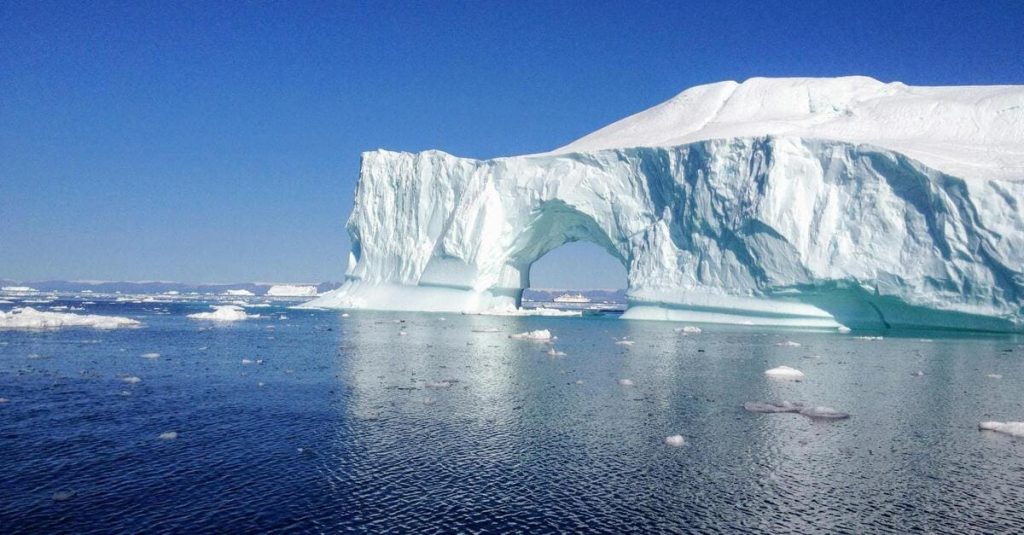
Let's be honest: Greenland is an expensive destination. Geographical isolation, the lack of roads, the short tourist season, transport costs and the import of almost everything (food, materials, fuel) make prices much higher than the European average.
Flight budget (return from Paris)
| Route | Return estimate |
|---|---|
| Paris → Copenhagen → Greenland | €800-2,000 |
| Paris → Reykjavik → Greenland | €700-1,800 |
| Domestic flights in Greenland (e.g. Kangerlussuaq ↔ Ilulissat) | €200-600 per leg |
Daily budget on the ground
| Item | Moderate budget | Comfort budget |
|---|---|---|
| Accommodation | €80-150 (hostel, guesthouse) | €200-500 (hotel, lodge) |
| Meals | €30-50 (self-catering + simple meals) | €60-120 (restaurants) |
| Activities | €50-150 (independent hiking + 1 excursion) | €150-500 (boat, helicopter, kayak excursions) |
| Local transport | €0-30 | €30-100 |
| Total/day | €160-380 | €440-1,200 |
Estimated total budget (excluding cruises)
| Length | Moderate budget | Comfort budget |
|---|---|---|
| 7 days | €2,500-4,500 | €5,000-10,000 |
| 10 days | €3,500-6,000 | €7,000-15,000 |
| 14 days | €4,500-8,000 | €10,000-20,000 |
Yes, it is expensive. But Greenland is not a trip you take every year. It is a life experience, a journey that stays with you forever. And compared with an Antarctic expedition cruise (€10,000-30,000), it is almost reasonable.
Tips to cut costs
- Self-catering: rent accommodation with a kitchen and shop at the supermarket (Pisiffik, Brugseni). Eating out three times a day in Greenland will ruin you.
- Independent hiking: trails are free. The Arctic Circle Trail costs nothing (apart from the flight and food).
- Travel in the low season: prices drop in May, September and winter.
- Book early: the best-priced flights and accommodation go fast.
- Share excursions: some activities are charged per group, not per person.
Currency and payments
- The currency is the Danish krone (DKK). Approximate rate: €1 ≈ DKK 7.5.
- Bank cards (Visa, Mastercard) are widely accepted, even in small towns. Greenland is very advanced in cashless payments (Scandinavian influence).
- Having a little cash can be useful in the most remote villages.
Practical tips
What to pack
Greenland requires gear suited to Arctic conditions, even in summer.
Summer (June-August)
| Category | Essentials |
|---|---|
| Layers | Thermal base layer, fleece, waterproof windproof jacket, light down jacket (cool evenings) |
| Legs | Hiking trousers, thermal leggings (for boat trips) |
| Feet | Waterproof hiking boots, rubber boots (for zodiac landings on a cruise) |
| Head | Thin beanie, sun cap, sunglasses (glare off the ice), buff/neck gaiter |
| Sun | SPF 50 sunscreen (the midnight sun is unforgiving), lip balm |
| Mosquitoes | Strong repellent (especially in July, inland: Arctic mosquitoes are fierce) |
| Photography | Spare batteries (the cold drains them fast), plenty of memory cards |
Winter (October-March)
| Category | Essentials |
|---|---|
| Layers | Full layering system: thermal base layer, fleece, warm down jacket, waterproof Arctic parka |
| Extremities | Lined gloves + over-mittens, thick hat, balaclava, thermal socks (several pairs) |
| Feet | Extreme cold boots (Sorel or Kamik type, insulated to at least -30°C) |
| Face | Face mask for dog sledding (the icy wind burns the skin) |
Health
- No mandatory vaccines. Routine vaccinations recommended (diphtheria-tetanus-polio, hepatitis).
- Greenland's healthcare system is decent but limited. A hospital in Nuuk, clinics in the other towns. Repatriation to Copenhagen for serious problems.
- Repatriation insurance is essential (see the previous section).
- Greenland does not have a pharmacy in every town. Bring your personal medication.
- Tap water: safe to drink everywhere in Greenland (it comes from glacial melt and lakes; some say it is the best water in the world).
Safety
Greenland is an extremely safe territory in human terms. Crime against tourists is almost non-existent.
The risks are natural:
- Weather: it can change in minutes. Fog, wind, sudden cold. Prepare for the worst, hope for the best.
- Icebergs and ice: never get too close to an iceberg on foot or by kayak. Icebergs can roll over or break apart without warning, creating dangerous waves.
- Wildlife: polar bears are present in Greenland, mainly on the east coast and in the north. On the west coast (Ilulissat, Nuuk), encounters are extremely rare but not impossible. If trekking independently in isolated areas, ask locally.
- Isolation: on independent treks (Arctic Circle Trail), there is no phone signal for most of the route. A satellite messaging device (such as a Garmin inReach) is strongly recommended.
Source: France Diplomatie, Denmark (Greenland)
Connectivity
- Mobile coverage exists in towns (operator: Tusass) but is non-existent outside settlements.
- Wi-Fi is available in hotels and some public spaces, but often slow (bandwidth limited by satellite links).
- Expect to be offline outside towns. That is also part of Greenland.
Getting around
| Mode | Use | Comment |
|---|---|---|
| Air Greenland (domestic flights) | Links between the main towns | Small planes (Dash 8), helicopters. Limited frequencies. Frequent delays (weather) |
| Boat / ferry | Arctic Umiaq Line (coastal ferry, Ilulissat-Nuuk and beyond) | Summer only. Slow but spectacular |
| Water taxi | Links between nearby villages | Booked locally |
| Dog sled | Traditional transport, winter | North of the Arctic Circle only (banned in the south to protect the sled dog breed) |
| Snowmobile | Winter | Organised excursions |
| On foot | Hiking | No roads between towns: hiking is the way to go "beyond" |
| No car | Not applicable | There are no roads between towns. Within Nuuk or Ilulissat there are a few km of road, but car hire is practically pointless |
Greenland in the current geopolitical context
It is impossible to write about Greenland in 2026 without mentioning the geopolitical context. In early 2025, US President Donald Trump's statements expressing interest in acquiring Greenland caused a diplomatic and media earthquake.
What travellers need to know:
- Greenland is an autonomous territory of the Kingdom of Denmark. It is not "for sale".
- The Greenlandic government (Naalakkersuisut) has its own long-term ambitions for independence, a domestic political issue rather than a direct tourism concern.
- The geopolitical situation does not affect travellers' safety in Greenland.
- The positive side effect: the massive media coverage has made Greenland known to a much wider global audience. Tourist demand is rising significantly.
- The side effect to anticipate: this rise in demand could make bookings harder and more expensive in the coming seasons. Book early.
Frequently asked questions (FAQ)
Do you need a visa to go to Greenland?
No, French citizens do not need a visa for a tourist stay in Greenland of up to 90 days. However, a valid passport is mandatory (an ID card is not enough, since Greenland is outside the Schengen area).
How much does a trip to Greenland cost?
Allow at least €2,500-4,500 for a 7-day trip on a moderate budget (including flights from Paris). A comfortable 10-day trip can reach €7,000-15,000. Expedition cruises range from €5,000 to €40,000+.
What is the best time to go to Greenland?
June to August for icebergs, the midnight sun, hiking and whales. September for the northern lights and autumn colours. February-April for dog sledding and sea ice.
Are there direct flights from France to Greenland?
No (as of 2025). You have to transit through Copenhagen (Denmark) or Reykjavik (Iceland). The opening of the new airports in Nuuk and Ilulissat could change things eventually, but no direct flight from France has been announced.
Is it dangerous to go to Greenland?
Greenland is one of the safest places in the world in terms of crime. The risks are entirely natural: unpredictable weather, cold, isolation, unstable icebergs, and (very rarely on the west coast) polar bears. With the right gear and common sense, the trip is perfectly safe.
Can you travel independently in Greenland?
Yes, unlike Bhutan, for example. No mandatory guide, no daily fee. You can book your flights, accommodation and activities yourself. However, logistics are complex (rare flights, limited accommodation, no roads) and booking everything in advance is strongly recommended, especially in summer.
Is it always cold?
In summer (June-August), temperatures on the west coast reach +5 to +15°C, sometimes +20°C on exceptional days. Not tropical, but much milder than most people imagine. In winter, however, yes: the cold is intense (-15 to -30°C, or lower).
Can you see the northern lights in Greenland?
Yes, Greenland is one of the best places in the world for the northern lights. The best period is September to April, and the best spots are Kangerlussuaq (dry air, clear skies) and southern Greenland. In summer, the midnight sun makes viewing impossible.
Find all our guides by clicking HERE.